Oak Strip, Plywood or Particle Board Under Old Carpet
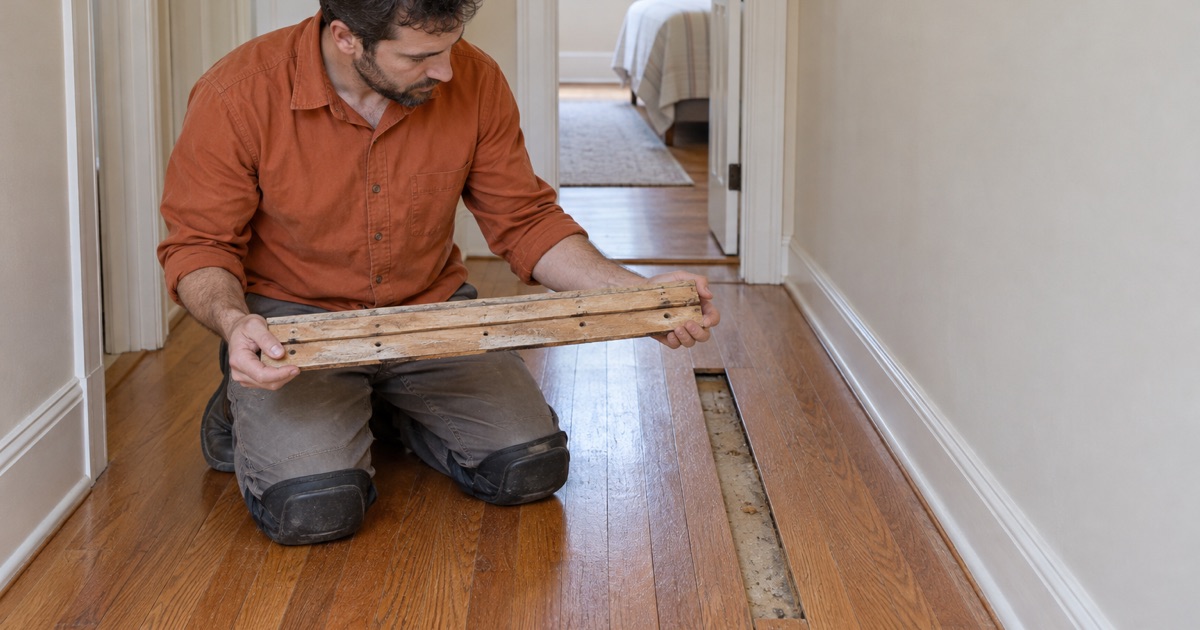
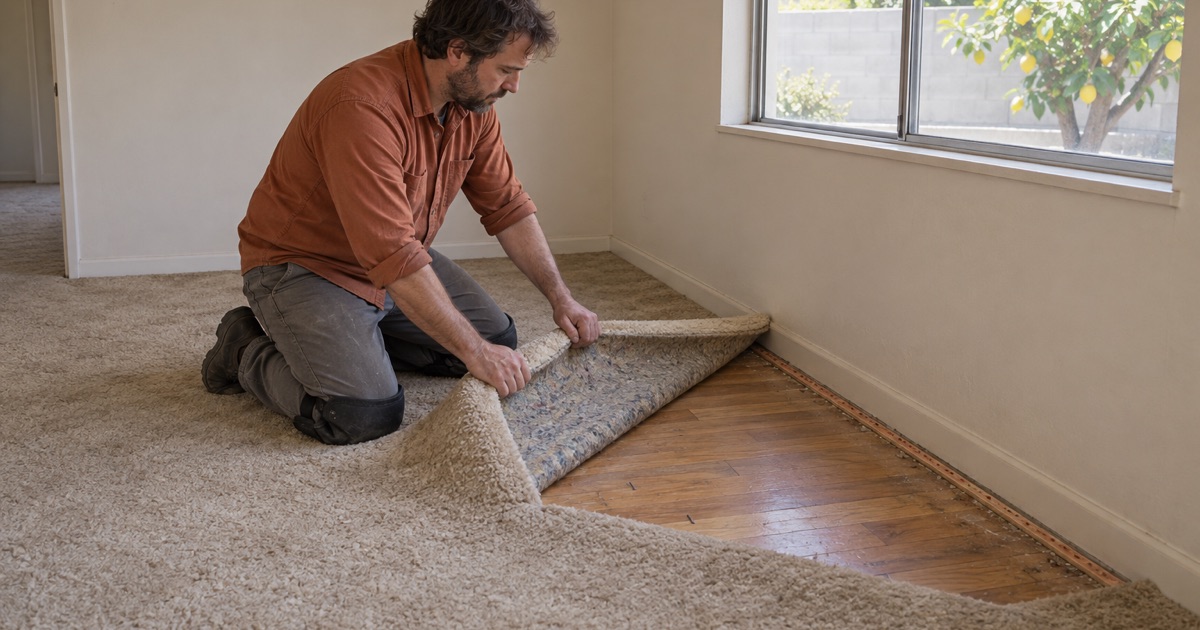
Pull up carpet in an older Baldwin Park house and you often find narrow oak strip flooring; in newer rooms, plywood or particle board is more common. We identify which one you have before any plan is made, because it decides whether this is a refinishing job or a new installation.
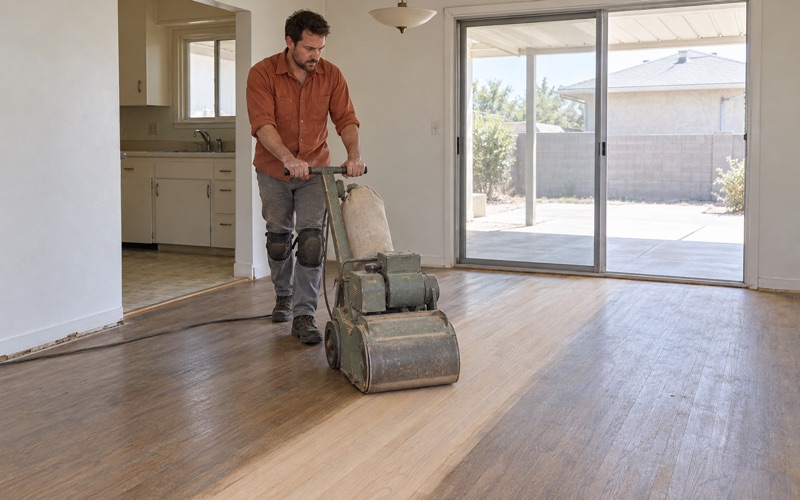
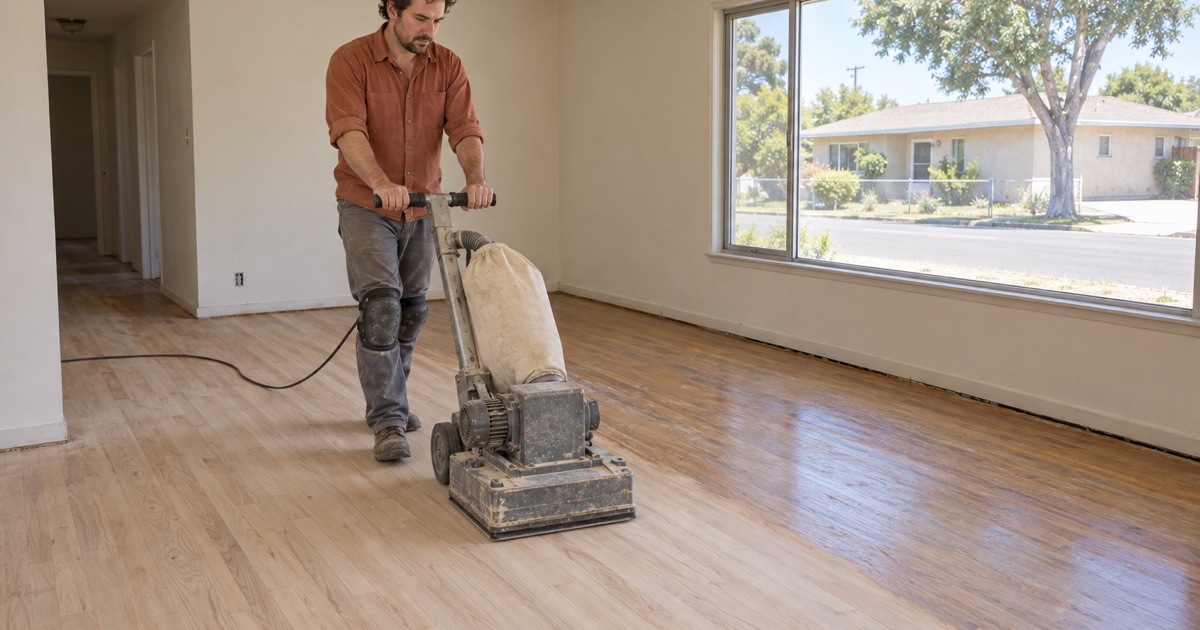
Oak strip that spent decades under carpet is usually in better shape than the owner expects. Aside from tack strip damage at the edges and a few stains, it can often be sanded and finished rather than replaced, which is the least expensive way to get a wood floor.
Tack Strip Holes and Staple Rows at the Walls
Tack strip is nailed around the room’s perimeter, and removing it leaves a line of small holes and sometimes split board edges. Carpet staples leave rows of pinholes across the field. We pull every staple and fill or replace damaged edge boards as part of the job, so the border does not look like a dotted line after the finish goes on.
Pad Stains, Stuck Padding and Carpet Glue on Wood
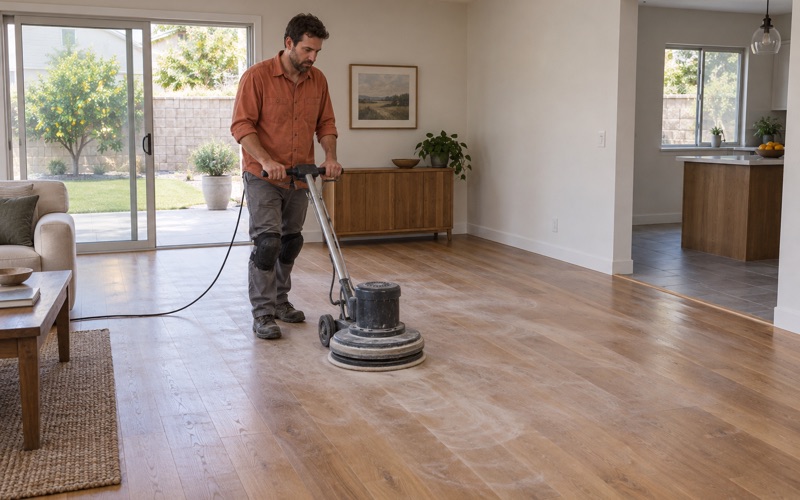
Old carpet pad can leave waffle-pattern stains, and foam that has broken down sometimes bonds to the finish. Some installers also glued carpet or pad directly to the wood. We scrape and sand these residues away and tell you honestly which dark stains are in the finish and which have soaked into the wood.
Particle Board Subfloors and Nail-Down Hardwood
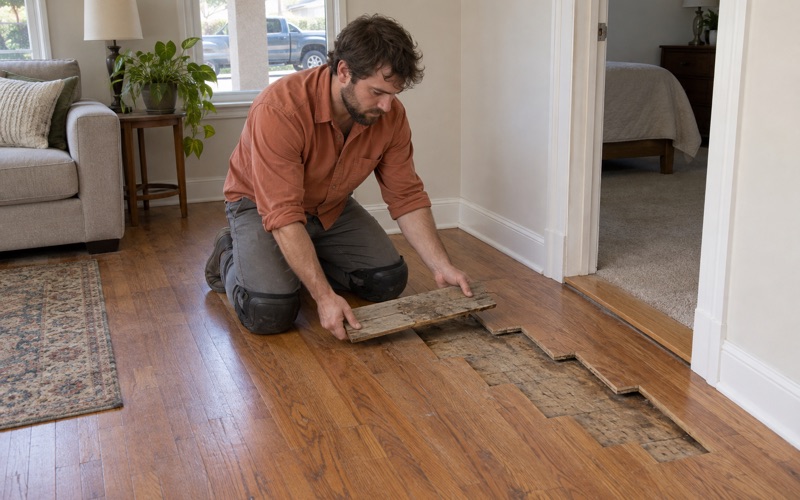
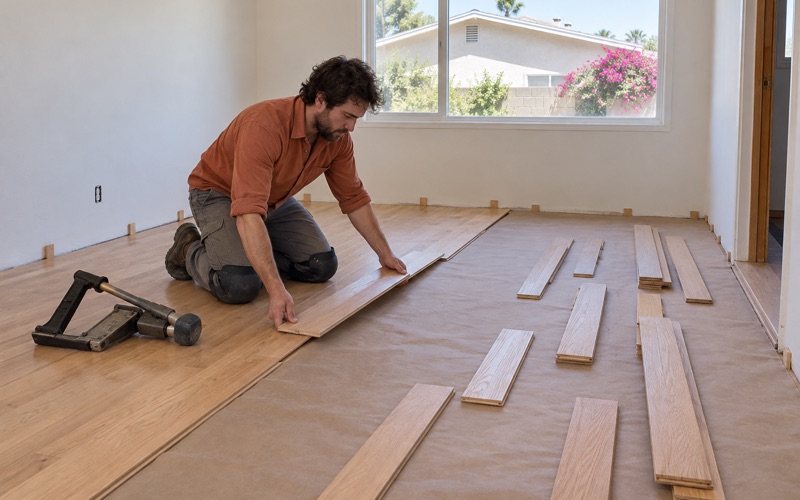
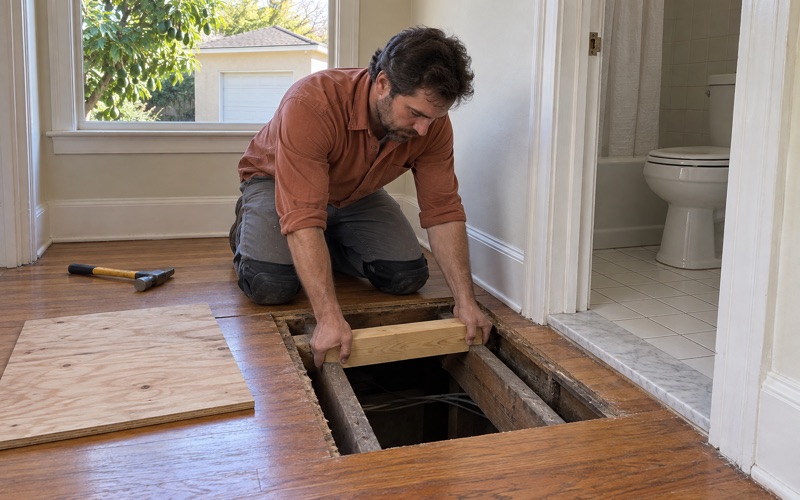
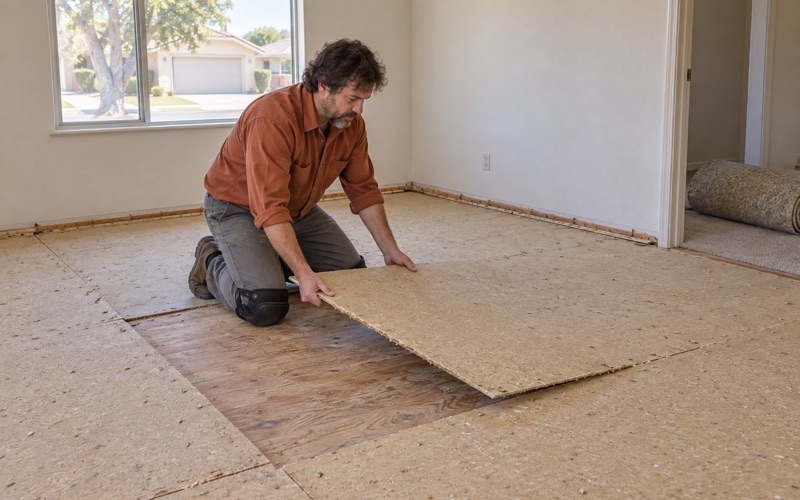
Particle board was a common underlayment beneath carpet, and it cannot hold a flooring cleat. The National Wood Flooring Association’s installation guidelines allow nail-down wood over most wood subfloors, particleboard excepted. When we find it, we remove it and install a proper plywood layer so the new floor stays tight.
Particleboard edge swell is another warning sign. Where a spill or leak has reached it, the panel puffs up and crumbles, and no wood floor laid over that section will sit flat.
Carpeted Stairs Turned Back Into Wood
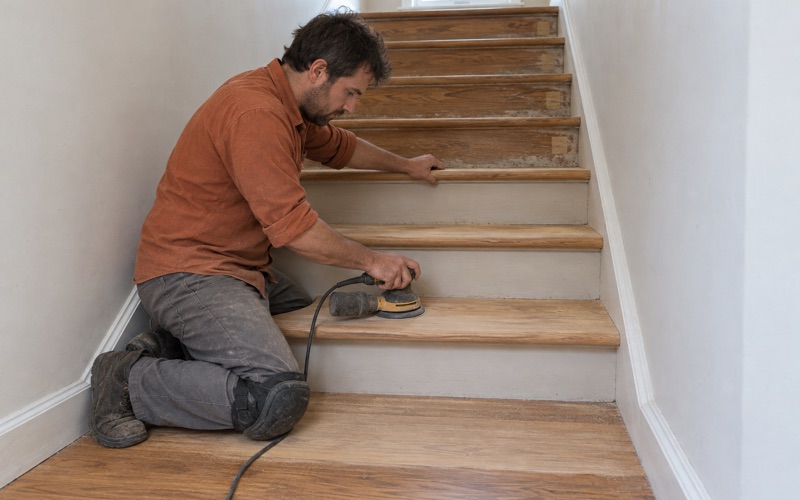
Many staircases were carpeted over rough pine stringers and treads that were never meant to be seen. We check what is under the runner first. Some stairs can be sanded and stained; others need retrofit treads and new risers installed over the old structure, with matching stair nosing.
What a Carpet-to-Hardwood Conversion Includes
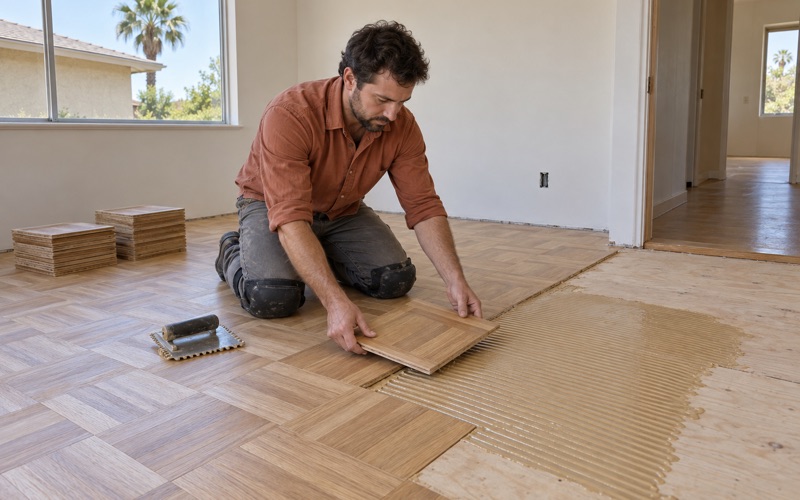
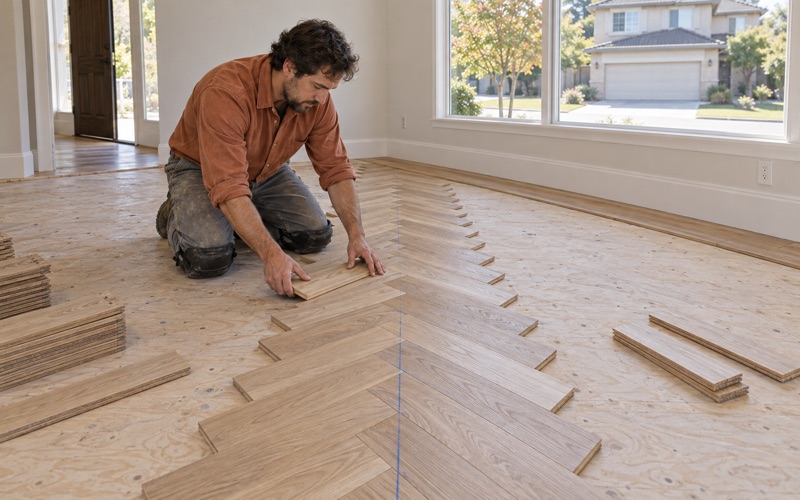
Replacing carpet with hardwood means more than laying boards. The job includes carpet and pad removal, tack strip and staple cleanup, subfloor repair or new plywood, transitions to tile or vinyl, and new baseboard or quarter round where the floor height changes.
We list each of those items in the estimate. That way you can compare quotes on the same scope, instead of finding out on day two that the subfloor work was never included.
Removing 1980s Vinyl, Linoleum and Tile
Kitchens and baths from the 1980s often have sheet vinyl or linoleum over adhesive, sometimes with a second layer beneath. We plan removal down to a sound subfloor, because wood laid over soft resilient layers flexes and opens gaps. A floor that looks like one layer is frequently two or three.
9x9 Tiles and Black Mastic Tested Before Removal
Old 9x9 floor tiles and black mastic adhesive can contain asbestos. South Coast AQMD Rule 1403 requires an asbestos survey of all flooring layers before renovation; the only exception is a house removing less than 100 square feet of intact material, and condos and townhouses do not qualify. We arrange testing before any scraping begins.
Pre-1978 Houses and Lead-Safe Work Practices
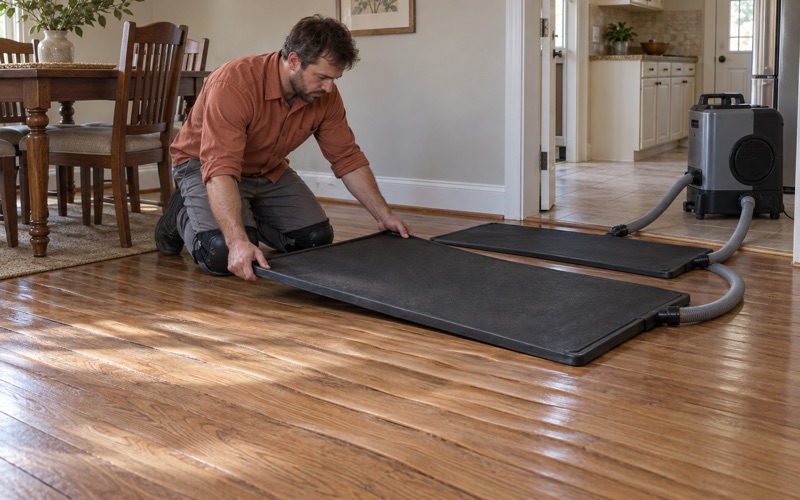
Sanding a floor in a house built before 1978 can disturb old painted or finished surfaces, and the federal EPA Renovation, Repair and Painting Rule then applies. Lead-safe practices change the job: sealed containment, HEPA vacuums and careful cleanup and verification. We account for that time in the schedule rather than skipping it to hit a date.